

ASL Flashcards for Kids: A Fun and Simple Way to Learn American Sign Language
Learning a new language doesn’t always begin with speaking.
For many children, communication starts with movement, facial expressions, and simple hand signs long before they learn to read or write. That’s one reason American Sign Language (ASL) has become increasingly popular in homes, classrooms, and homeschool environments.
Whether you’re introducing sign language to a toddler, helping a preschooler build communication skills, or adding ASL to your classroom, flashcards provide one of the easiest and most effective ways to learn.
Unlike worksheets that often require children to sit still for long periods, flashcards encourage active participation. Kids can look at a picture, copy the hand sign, repeat the letter or word aloud, and turn learning into a fun game.
Parents love ASL flashcards because they’re simple to use, portable, and suitable for short daily practice sessions.
Teachers appreciate them because they fit naturally into circle time, literacy centers, and small-group activities.
Homeschool families often include them as part of their language arts or life skills lessons.
Even speech therapists and special education professionals use visual flashcards to support communication and confidence.
The best part is that learning ASL doesn’t have to feel overwhelming.
Just a few minutes of practice each day can help children become familiar with the alphabet, improve memory, strengthen fine motor skills, and develop a greater appreciation for different ways people communicate.
In this complete guide you’ll learn:
- What ASL flashcards are
- Why children learn so well with flashcards
- The benefits of learning American Sign Language
- Who can use ASL flashcards
- Creative learning activities
- Printing and classroom tips
- Frequently asked questions
- Printable flashcard recommendations
Whether you’re a parent teaching at home, a classroom teacher, or just beginning your ASL journey, this guide will help you get started with confidence.
What Are ASL Flashcards?
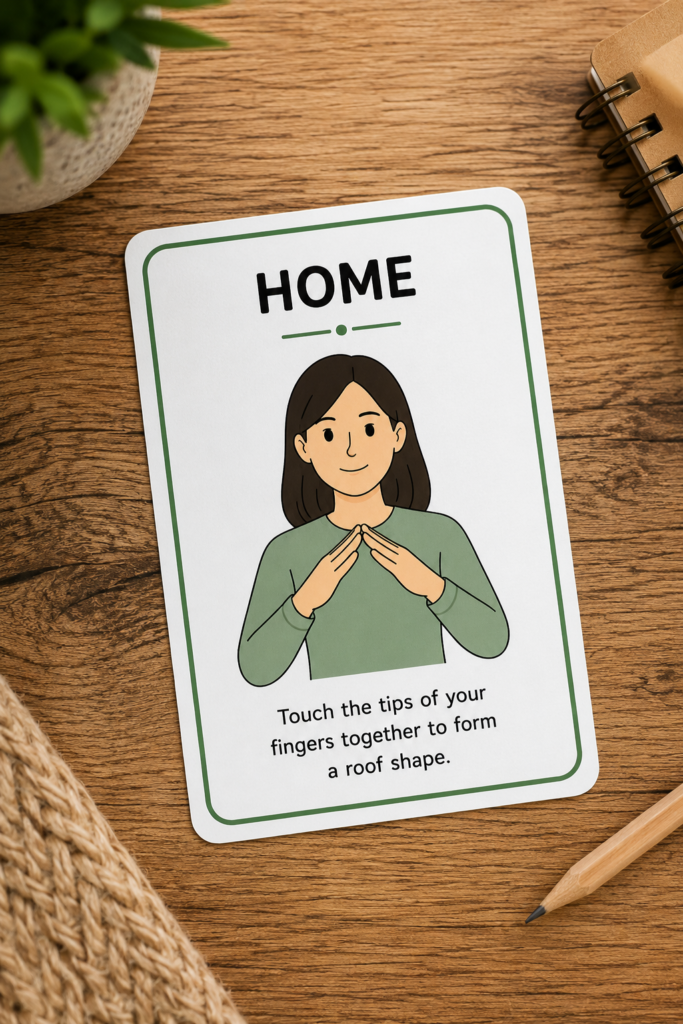
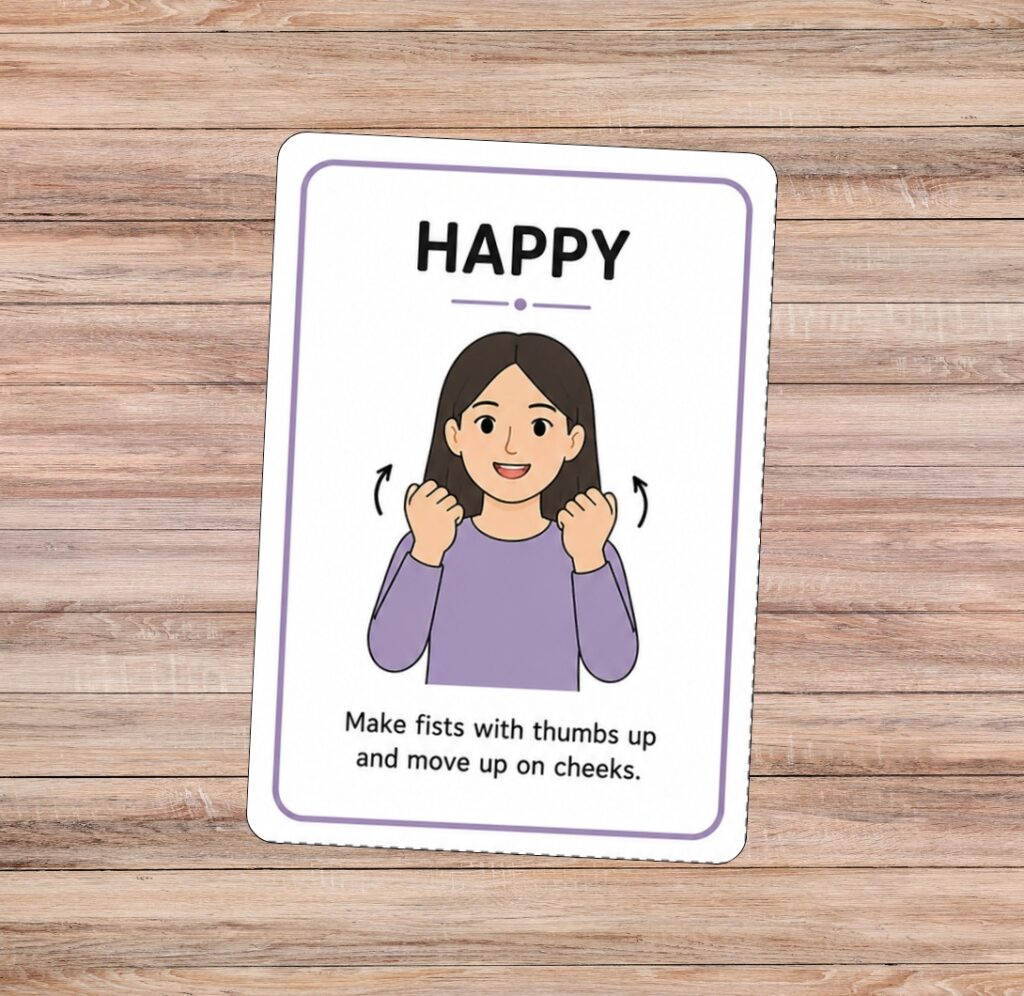
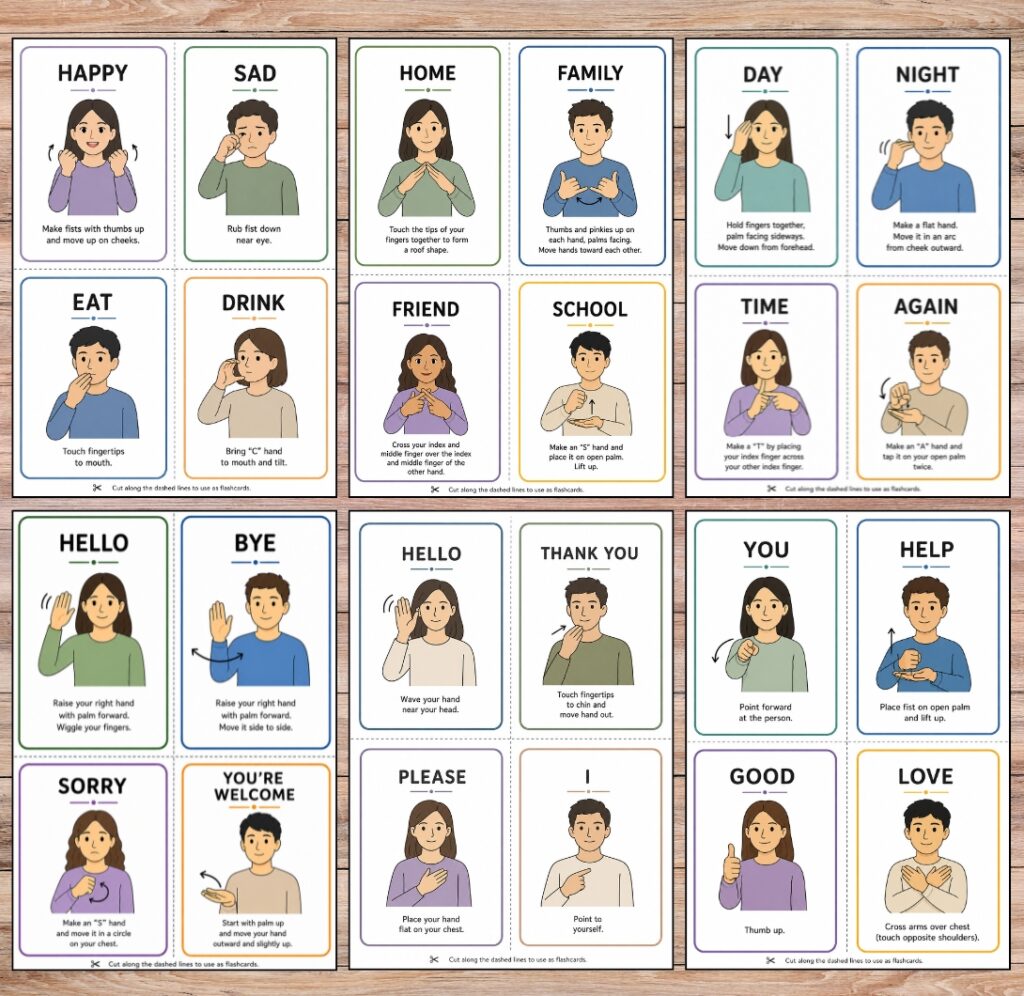
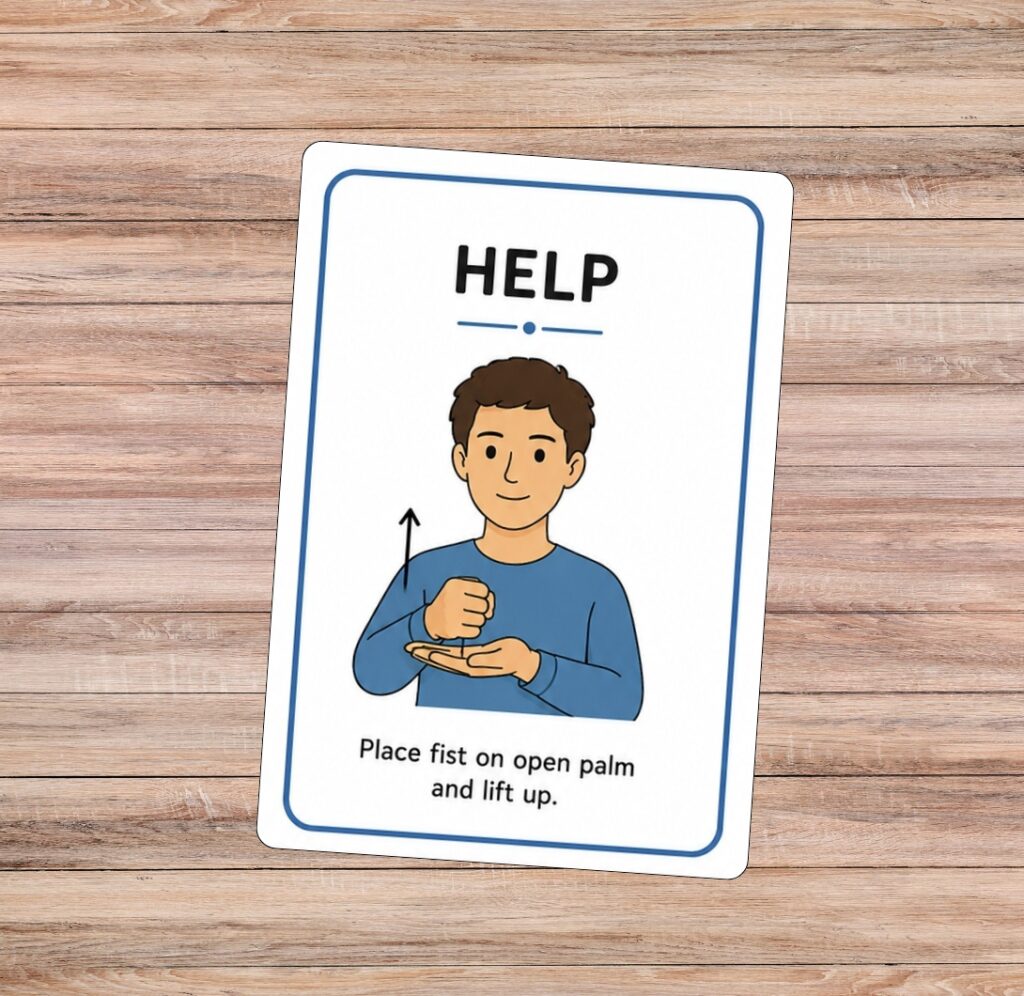
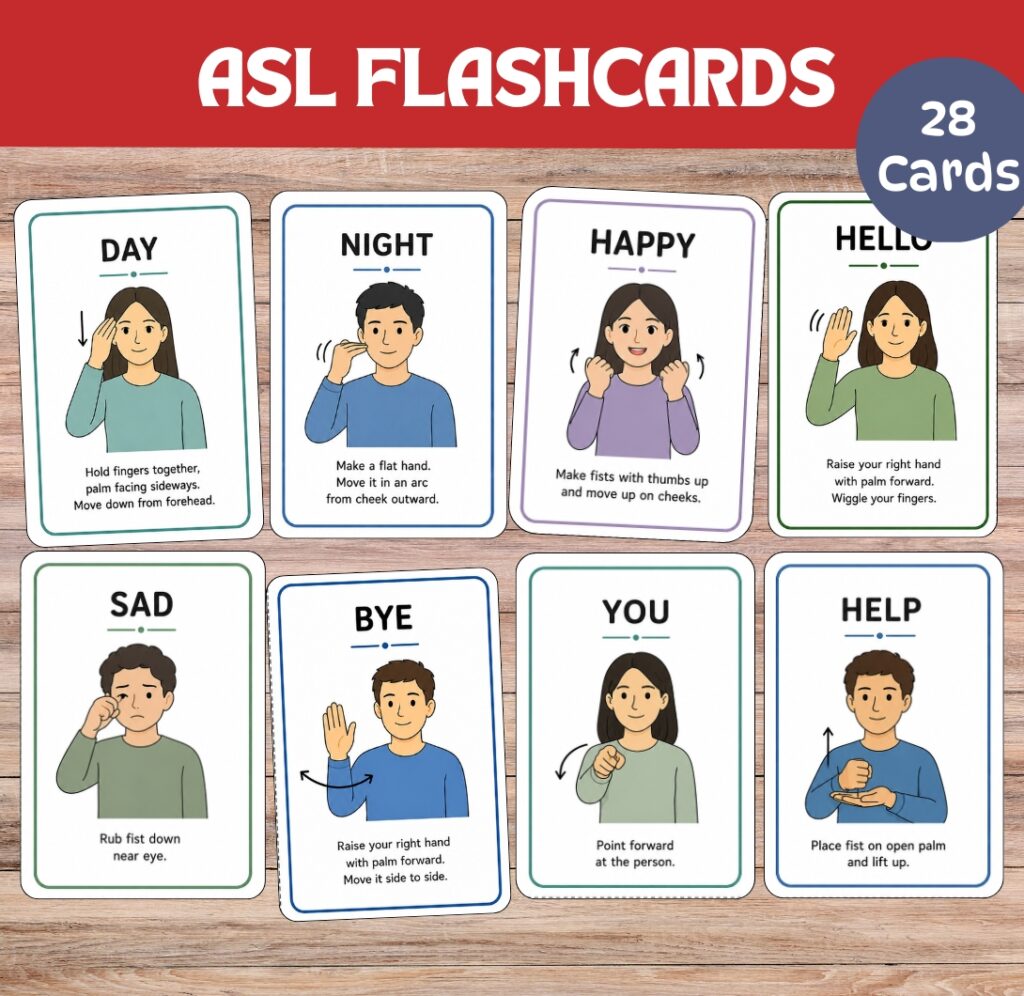
ASL flashcards are educational cards that help children learn the hand signs used in American Sign Language.
Each flashcard usually includes:
- A letter or vocabulary word
- An illustration or photograph of the correct hand sign
- A clear printed letter or word
- Bright, child-friendly visuals
Because children can both see and copy the hand shapes, flashcards support visual learning while encouraging hands-on practice.
Many printable ASL flashcards are laminated for repeated classroom or home use, making them a practical resource that can be enjoyed year after year.
Why ASL Is a Wonderful Skill for Children
Many people think sign language is only useful for individuals who are deaf or hard of hearing.
In reality, learning basic ASL offers benefits for many children.
It introduces a new way of communicating, encourages patience, and helps children understand that people express themselves in different ways.
Learning ASL can also:
- Build communication confidence
- Improve visual attention
- Encourage memory skills
- Strengthen fine motor coordination
- Support early language development
- Promote inclusion and empathy
- Introduce children to another language
For young learners, signing often feels like a game, making practice enjoyable rather than stressful.
Benefits of Using ASL Flashcards
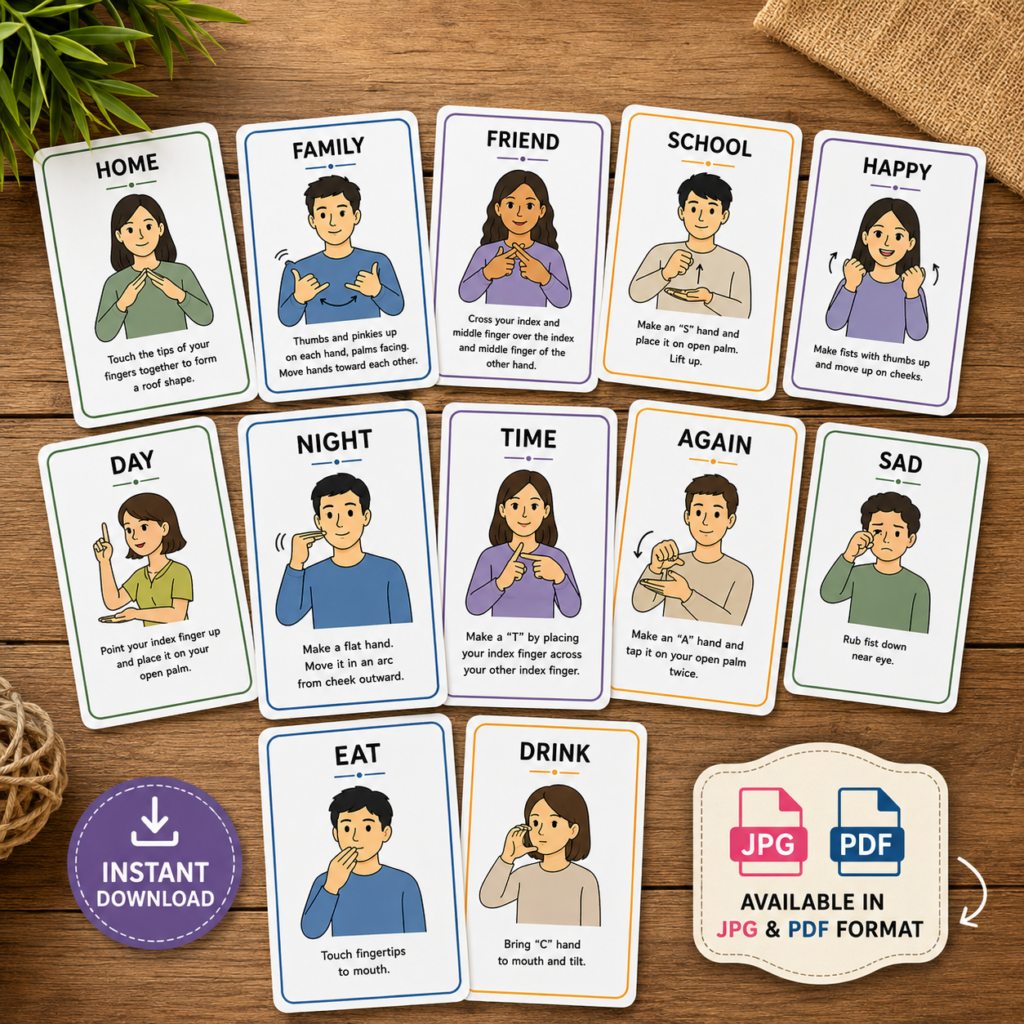
Flashcards are one of the most versatile learning tools because they can be adapted to different ages, learning styles, and educational settings.
Here’s why so many families and educators choose them.
| Benefit | Why It Matters |
|---|---|
| Visual Learning | Children clearly see each hand sign. |
| Hands-On Practice | Kids copy signs while learning. |
| Memory Building | Repetition helps long-term recall. |
| Fine Motor Skills | Forming hand signs improves coordination. |
| Flexible Learning | Use at home, school, or on the go. |
| Confidence | Small daily successes encourage continued learning. |
The combination of visual learning and physical movement makes flashcards especially engaging for younger children.
Who Can Use ASL Flashcards?
One of the best things about ASL flashcards is how flexible they are.
They’re suitable for many different learning environments.
Parents
Spend just 5–10 minutes each day practicing together after school or before bedtime.
Preschool Teachers
Introduce one or two new signs each week during circle time.
Kindergarten Classrooms
Use flashcards during alphabet lessons, literacy centers, or morning meetings.
Homeschool Families
Add ASL as part of language arts, life skills, or enrichment activities.
Speech Therapists
Use flashcards to support visual communication and interactive learning.
Special Education Classrooms
Pair visual flashcards with demonstrations to reinforce communication skills in an engaging way.
No matter where they’re used, consistency is more important than long lessons.
Even a few minutes each day can help children become comfortable recognizing and practicing new signs.
Why Printable Flashcards Are So Popular
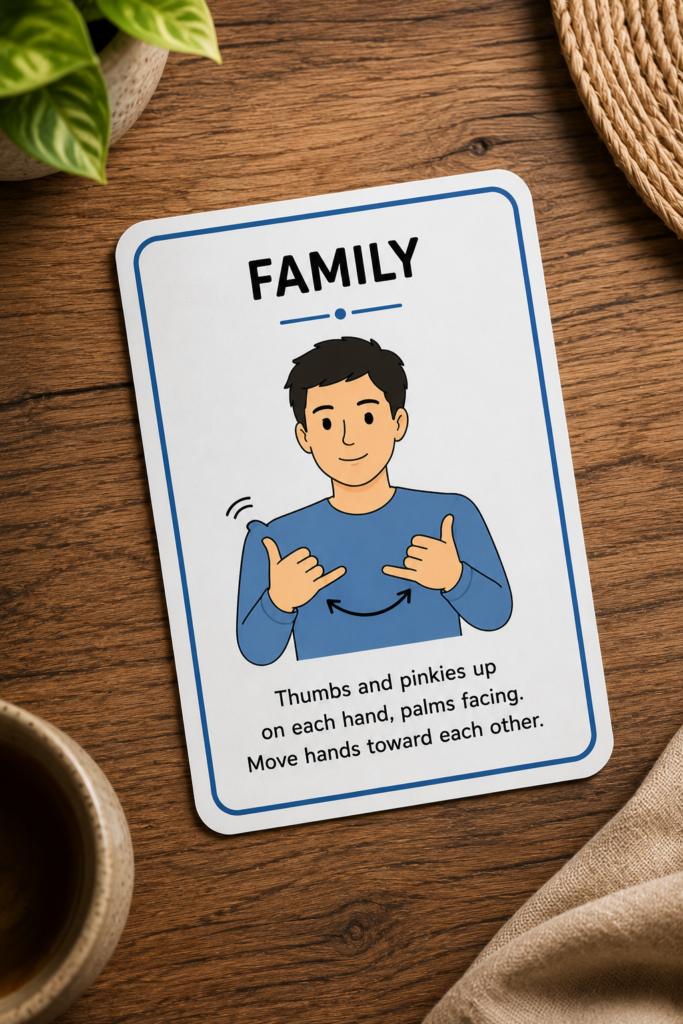
Printable flashcards have become a favorite among parents and teachers because they’re convenient, affordable, and easy to prepare.
Instead of waiting for physical materials to arrive, families can simply download, print, and begin learning.
Many printable sets also allow you to print multiple copies, making them ideal for classrooms, homeschool co-ops, learning centers, or siblings.
With cardstock and a laminator, printable flashcards can be reused for years.
50 Fun Ways to Use ASL Flashcards
One of the biggest advantages of ASL flashcards is their flexibility.
You don’t need a formal lesson plan or a classroom full of supplies to make learning engaging. With just a few cards and a few minutes each day, children can build confidence, strengthen memory, and develop communication skills through play.
Whether you’re teaching one child or an entire classroom, these activities help turn simple flashcards into meaningful learning experiences.
Beginner ASL Flashcard Activities
These simple activities are perfect for children who are just starting to learn American Sign Language.
1. Letter of the Day
Choose one flashcard each morning and practice that sign several times throughout the day.
2. Copy the Sign
Show a flashcard and encourage children to copy the hand shape as accurately as possible.
3. Name Practice
Spell each child’s first name using the ASL alphabet.
This quickly becomes one of the most popular classroom activities.
4. Alphabet Wall
Display one new flashcard every week to create an interactive ASL alphabet wall.
5. Morning Review
Spend five minutes reviewing previously learned letters before introducing a new one.
6. Flashcard Hunt
Hide flashcards around the room and ask children to find specific letters.
7. Match the Letter
Match printed alphabet letters with the correct ASL flashcards.
8. Fast Find
Call out a letter.
Children race to hold up the correct flashcard.
9. Sign and Say
Children make the sign while saying the letter aloud.
This combines visual, physical, and verbal learning.
10. Build the Alphabet
Arrange flashcards in alphabetical order.
Interactive Classroom Games
These activities work especially well for teachers and homeschool groups.
11. Partner Practice
Students work in pairs.
One shows the flashcard.
The other copies the sign.
12. ASL Memory Match
Print two copies of the flashcards.
Turn them upside down and play a matching game.
13. Alphabet Relay
Divide students into teams.
Each child runs to collect the next correct letter.
14. Mystery Card
Show only part of a flashcard.
Ask children to guess the letter.
15. Silent Challenge
Communicate using only ASL alphabet signs for one minute.
16. Flashcard Bingo
Create bingo boards using ASL letters.
17. Alphabet Race
Scatter flashcards across the floor.
Call a letter and let students find it first.
18. Sign the Word
Spell simple words such as:
CAT
DOG
SUN
BOOK
19. Teacher Says
Play a variation of “Simon Says” using ASL signs.
20. Alphabet Circle
Sit in a circle.
Each child signs the next letter of the alphabet.
Homeschool Learning Ideas
Parents teaching at home often prefer activities that fit naturally into daily routines.
21. Five-Minute Practice
Review five flashcards before starting lessons.
22. Story Time
Sign the first letter of characters’ names while reading books.
23. Kitchen Learning
Practice flashcards while preparing meals together.
24. Car Ride Challenge
Review flashcards during short car journeys.
25. Bedtime Review
End the day by practicing five favorite signs.
26. Alphabet Treasure Hunt
Hide flashcards around the house.
Children collect them in alphabetical order.
27. Flashcard Calendar
Introduce one new letter every day.
28. Family Quiz
Parents hold up flashcards.
Children identify the correct letter.
29. Mirror Practice
Children practice signs while watching themselves in a mirror.
30. Favorite Letter
Ask children to choose their favorite sign and explain why.
Movement-Based Learning
Children remember information better when movement is involved.
31. Jump to the Letter
Place flashcards on the floor.
Children jump to the correct one.
32. Alphabet Hopscotch
Use chalk to create an alphabet path.
Practice the matching ASL sign at each stop.
33. Flashcard Toss
Throw a soft ball.
The catcher signs the flashcard shown.
34. Dance and Sign
Play music.
Pause it occasionally and practice a flashcard.
35. Action Alphabet
Combine each sign with a fun movement.
36. Sign Charades
Act out clues while classmates guess the correct letter.
37. Walk and Sign
Practice signs while walking around the room.
38. Giant Flashcards
Print oversized cards for group activities.
39. Outdoor Alphabet Hunt
Hide flashcards outside and let children search for them.
40. Obstacle Course
Complete a sign before moving to the next obstacle.
.
Advanced Learning Activities
Once children know the alphabet, continue building confidence.
41. Spell Family Names
42. Spell Favorite Animals
43. Spell Favorite Foods
44. Daily Word Challenge
45. Secret Messages
46. Classroom Quiz Game
47. Timed Alphabet Challenge
48. Alphabet Review Relay
49. Sign-and-Guess Competition
50. Create Your Own Flashcards
Encourage children to draw their own illustrations and practice the matching ASL signs.
Creating flashcards reinforces learning while encouraging creativity.
Quick Tips for Success
Learning American Sign Language doesn’t require long lessons.
A few minutes of consistent practice each day is usually more effective than one long weekly session.
Keep these tips in mind:
- Introduce only a few new signs at a time.
- Review previously learned signs regularly.
- Celebrate progress, not perfection.
- Turn practice into games whenever possible.
- Encourage children to use signs during everyday conversations.
The goal is to make learning enjoyable so children stay excited and motivated.
DIY vs. Printable ASL Flashcards
Many parents and teachers wonder whether they should create their own ASL flashcards or use a professionally designed printable set.
Both options can be effective, and the right choice depends on your time, budget, and teaching goals.
Here’s a comparison to help you decide.
| DIY Flashcards | Printable ASL Flashcards |
|---|---|
| Create cards by hand | Ready to print instantly |
| Fully customizable | Professionally designed and consistent |
| Requires time and supplies | Saves preparation time |
| Great as a family craft | Perfect for classrooms and homeschool |
| Easy to personalize | Easy to print multiple copies |
Making flashcards yourself can be a fun weekend project, especially if children enjoy drawing and coloring.
However, many busy parents and teachers prefer printable flashcards because they’re ready to use in just a few minutes and provide a consistent learning experience.
Save Time with Printable ASL Flashcards
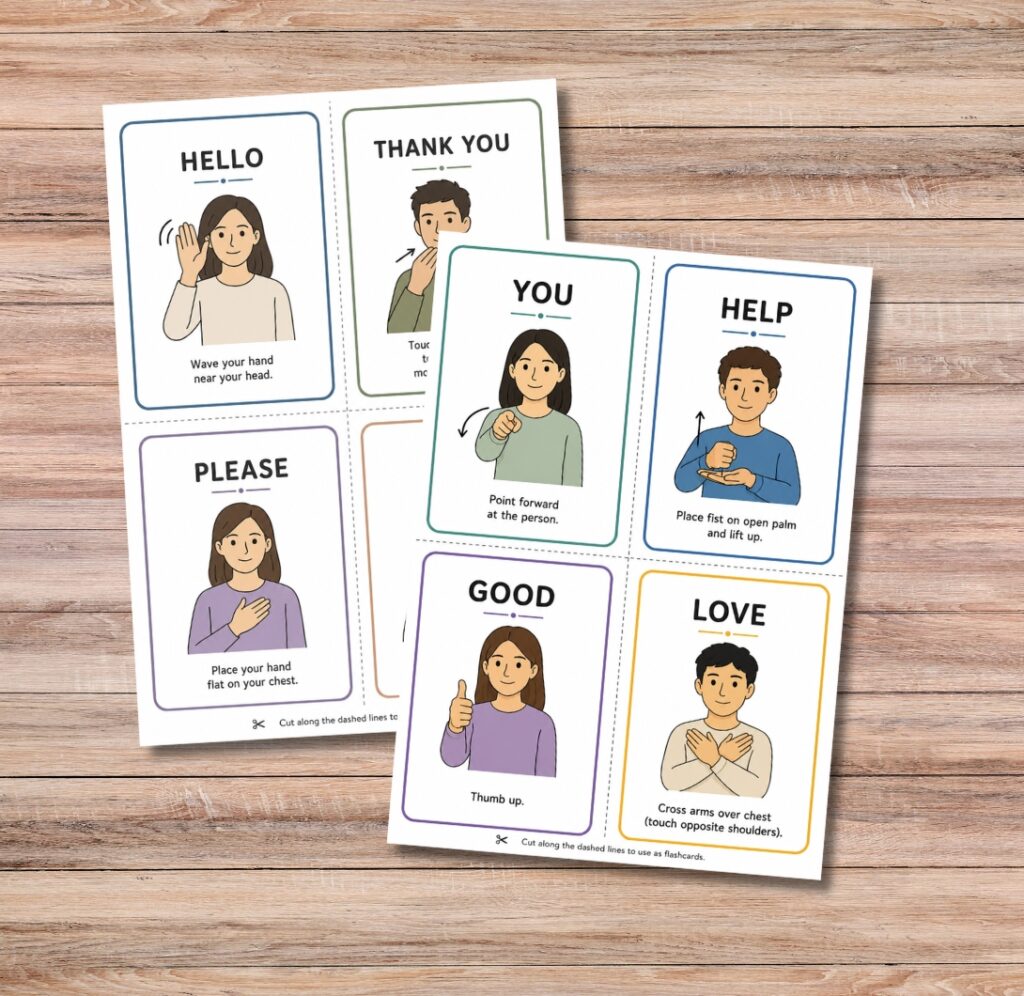
If you’re looking for an easy way to introduce American Sign Language without creating learning materials from scratch, printable ASL flashcards are a practical solution.
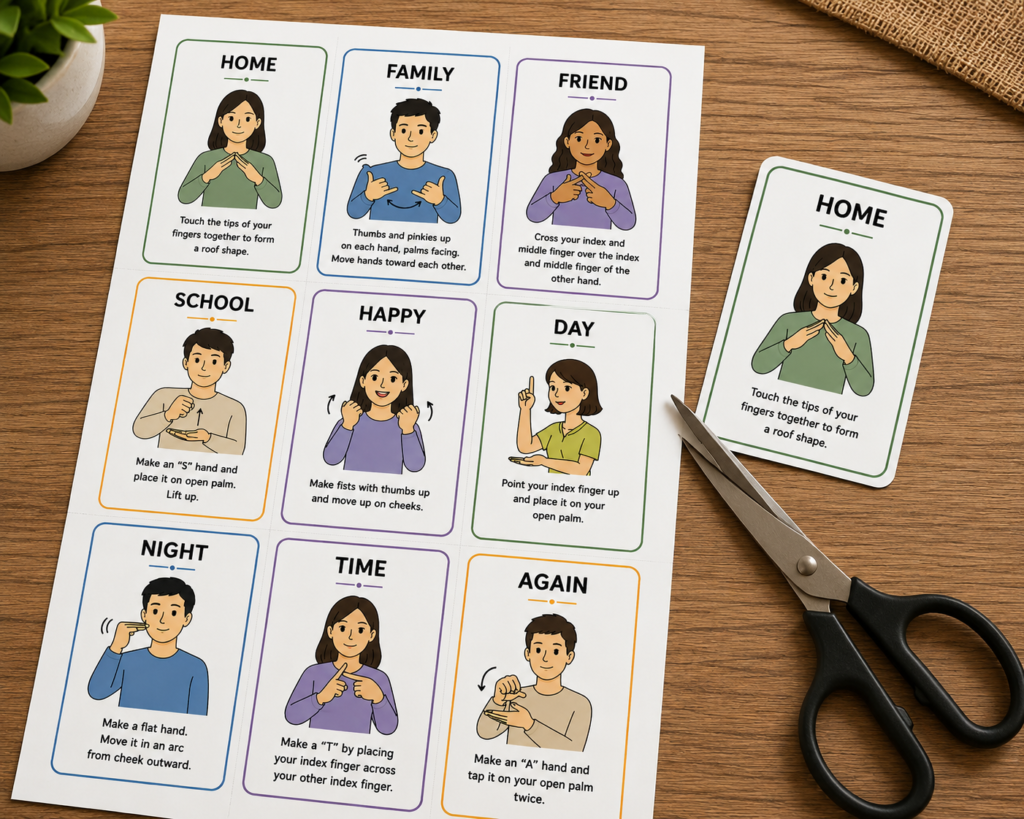
Simply download the files, print them, and begin practicing at home or in the classroom.
Tips for Printing ASL Flashcards
A few simple printing choices can make your flashcards easier to use and much more durable.
Print on Cardstock
Cardstock holds its shape better than standard printer paper and stands up to frequent classroom use.
Laminate for Long-Term Use
Laminating protects the cards from spills, bending, and everyday wear, making them ideal for repeated practice.
Cut Carefully
Using a paper trimmer creates clean, straight edges that make the cards look more professional.
Store by Category
Keep flashcards organized in labeled envelopes, zip bags, or small storage boxes so children can quickly find the cards they need.
Print Multiple Sets
Having more than one set allows for partner games, memory activities, and small-group learning.
Common Mistakes to Avoid
Learning sign language should be enjoyable, not overwhelming.
Here are a few common mistakes that can slow progress.
Trying to Learn Too Much at Once
Introduce just a few new signs at a time.
Children remember more when lessons are short and consistent.
Skipping Review
Regular review helps move information into long-term memory.
Spend a few minutes revisiting previously learned signs before introducing new ones.
Focusing Only on Memorization
Encourage children to actually use signs during games, conversations, and classroom activities.
Practical use builds confidence.
Making Practice Feel Like a Test
Children learn best when they’re having fun.
Games, songs, and movement activities are often much more effective than drills.
Comparing Children
Every learner develops at a different pace.
Celebrate progress rather than perfection.
Frequently Asked Questions
What age is best for ASL flashcards?
Many children can begin exploring simple signs during the toddler and preschool years.
ASL flashcards are commonly used with preschoolers, kindergarten students, elementary-aged children, and beginner learners of all ages.
How often should children practice?
Short daily practice sessions of five to ten minutes are usually more effective than one long lesson each week.
Consistency is the key to building confidence and remembering new signs.
Can teachers use printable ASL flashcards in the classroom?
Yes.
Many teachers use them during circle time, literacy centers, small-group instruction, morning meetings, and learning stations.
They’re also helpful for classroom games and partner activities.
Are printable flashcards suitable for homeschool?
Absolutely.
Printable flashcards are popular with homeschool families because they require very little preparation and can easily be incorporated into daily lessons.
Should I laminate ASL flashcards?
Laminating isn’t required, but it helps protect the cards and allows them to be reused for many years.
Looking for Ready-to-Print ASL Flashcards?
If you’re ready to start learning without spending hours creating teaching materials, printable ASL flashcards provide a quick and convenient solution for parents, teachers, homeschool families, and therapists.
Final Thoughts
Learning American Sign Language is more than memorizing hand signs—it’s about building communication, confidence, and understanding.
Whether you’re introducing ASL at home, in a classroom, or as part of a homeschool curriculum, flashcards provide a simple and engaging way to help children learn through repetition, movement, and play.
The most important step isn’t mastering every sign immediately.
It’s creating enjoyable learning experiences that encourage children to stay curious and keep practicing.
With a few minutes of daily practice and the right learning tools, children can build skills that support communication for years to come.
Help Your Child Start Learning ASL Today
Ready to make learning American Sign Language simple and enjoyable?
Our printable ASL Flashcards are designed for parents, teachers, homeschool families, and therapists who want a convenient, engaging resource for beginner learners.
✔ Instant Digital Download
✔ Print at Home or School
✔ Perfect for Preschool, Kindergarten & Elementary Students
✔ Reusable Year After Year